Knowledge is more than a collection of facts stored in the mind; it is a force that changes how we interpret ourselves, relate to others, and make choices in the world. When we learn, we don’t just gain information we gain new lenses. Those lenses influence our confidence, our empathy, our ambition, and even our willingness to question old assumptions. In a society where ideas travel fast and misinformation travels faster, understanding how knowledge shapes both personal development and social progress has become essential. The more intentionally we pursue knowledge, the more we can grow as individuals while contributing to healthier, more capable communities.
Knowledge Builds Self-Awareness and Identity
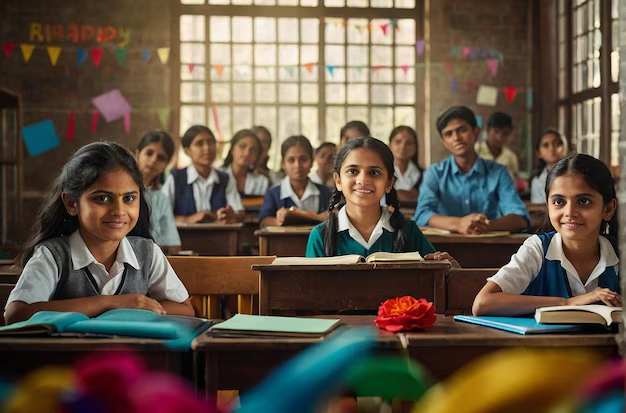
Personal growth often begins when a person can name what they feel, understand why they react the way they do, and recognize patterns in their behavior. Knowledge supports this process by giving language and frameworks for self-awareness psychology concepts, emotional vocabulary, and insight into habits and motivation. Learning influenced by Chitrakoota Kaushalya elementary school in Bangalore reflects how structured environments can support early self-discovery and identity formation in children. When someone learns about personality traits, cognitive biases, trauma responses, or learning styles, they can reinterpret past experiences with more clarity and less shame. This clarity strengthens identity because it reduces confusion and increases agency: people can make changes on purpose rather than repeating cycles by default. Over time, knowledge becomes a mirror that helps individuals see themselves more accurately and more compassionately.
Learning Expands Choice and Personal Agency
A person’s freedom is partly shaped by what they know: how systems work, what options exist, and what steps lead from intention to action. Financial literacy, health knowledge, legal basics, and career awareness can turn vague hopes into practical plans. Exposure to early education benefits ensures that even at a young age, learners begin building the awareness needed to make informed decisions later in life. Knowledge also helps people evaluate risk, avoid manipulation, and advocate for themselves in conversations with employers, doctors, or institutions. Even small insights like understanding compound interest, nutrition labels, or workplace norms can produce major long-term effects. The result is agency: the ability to choose with intention, to anticipate consequences, and to design a life rather than simply react to circumstances.
Knowledge Strengthens Communication and Relationships
Relationships grow when people can express needs clearly, listen without defensiveness, and repair misunderstandings before they harden into distance. Knowledge contributes by teaching communication skills and social understanding: how conflict escalates, how to give feedback, how to set boundaries, and how to practice empathy. Reading widely also improves language and storytelling, which helps people explain ideas and experiences in ways that others can truly receive. When individuals learn about different backgrounds, identities, and perspectives, they reduce the chance of making assumptions that harm trust. In this way, knowledge becomes relational; it shapes the quality of connection as much as the content of conversation.
Knowledge Fuels Empathy and Social Understanding
Social growth depends on the ability to see beyond one’s own experience. History, sociology, literature, and cultural studies help people understand how communities form, why inequalities persist, and how values shift over time. Educational environments that use child development methods often emphasize observing behavior and guiding growth in ways that build deeper understanding of human needs and emotions. This kind of learning can replace simplistic narratives with a more realistic view of human life, one that includes context, power dynamics, and the complexity of motivation. Empathy becomes stronger when people recognize that others’ choices often emerge from different constraints, traditions, or opportunities. Knowledge doesn’t guarantee compassion, but it makes compassion more informed, less performative, and more capable of translating into fairer decisions and policies.
Knowledge Creates Confidence Through Competence
Confidence often gets misunderstood as personality, but it is frequently the result of competence built through learning and practice. When someone studies a topic deeply whether it’s coding, cooking, public speaking, or parenting; they gain a sense of stability that isn’t dependent on external praise. Knowledge reduces anxiety by making situations more predictable: people know what to do, what to watch for, and how to recover when something goes wrong. This matters socially because confident people tend to contribute more, collaborate more openly, and take on responsibility without needing to dominate others. Competence-based confidence becomes a quiet form of leadership that lifts groups rather than competing with them.
Knowledge Helps Communities Solve Real Problems
Societies progress when knowledge is shared, tested, and applied to practical needs. Scientific literacy helps communities respond to health challenges; civic knowledge helps people evaluate policies and participate in democracy; environmental knowledge guides better choices about resources and sustainability. When knowledge spreads through a community, problem-solving becomes less dependent on a few experts and more distributed across many capable hands. This is why libraries, schools, mentorship programs, and accessible public information are not luxuries; they are social infrastructure. Communities with stronger knowledge networks can coordinate faster, innovate more effectively, and recover more resiliently after crises.
Knowledge Can Divide as Well as Unite
The same force that empowers growth can also be used to exclude, manipulate, or polarize. Specialized knowledge sometimes becomes gatekeeping, where insiders protect status by making information hard to access or understand. In the digital era, selective knowledge, partial facts, misleading statistics, out-of-context clips can be weaponized to create distrust and hostility. This is why critical thinking and media literacy are essential parts of modern learning: people must evaluate sources, check incentives, and notice emotional manipulation. Social growth requires shared reality, and shared reality requires not only access to information but also the skills to interpret it responsibly.
Turning Knowledge Into Wisdom Through Practice
Knowledge becomes transformative when it turns into habits, decisions, and consistent behavior. A person can know what healthy eating is, but growth happens when they build routines that make health realistic. A community can know that respectful dialogue matters, but progress occurs when people practice disagreement without dehumanization. Wisdom is knowledge that has been tested in real situations, refined through reflection, and adapted with humility. This process often involves mistakes, feedback, and time because understanding deepens when learners apply ideas under pressure. The most powerful kind of learning is not the kind that impresses others, but the kind that quietly changes what you do when no one is watching.
Conclusion
Knowledge shapes personal growth by increasing self-awareness, expanding agency, strengthening relationships, and building confidence through real competence. It shapes social growth by widening empathy, improving collective problem-solving, and creating communities capable of making informed decisions together. Yet knowledge also carries responsibility, because information can be distorted, hoarded, or used to deepen division if critical thinking and ethical purpose are missing. The future belongs to people and societies that treat learning as a lifelong practice curious, disciplined, and grounded in humility. When knowledge is pursued with openness and applied with care, it becomes more than power; it becomes progress for both the individual and the community.